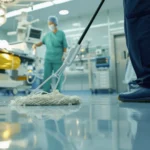
Your business needs janitorial services in NYC when cleaning keeps falling behind, employees lose work hours tidying up, restrooms run out of supplies, or customers notice dust, odors, and stained floors. Rising sick days, worn carpets, and safety or inspection problems are other clear signs. A professional cleaning crew fixes these issues on a steady schedule.
Most business owners do not decide to hire cleaners overnight. In a city like New York, where offices and storefronts see heavy foot traffic all day, the need builds faster than most owners expect. A trash can overflows on a busy day. Someone skips wiping the break room counter. The carpet near the front door starts to look gray. Each small slip seems easy to ignore until a customer, an employee, or an inspector points it out.
This guide covers the most common warning signs, explains what each one costs your business, and helps you decide whether outside help makes sense.
What Do Janitorial Services Include?
Commercial janitorial services are routine cleaning and upkeep for commercial spaces such as offices, stores, medical clinics, schools, and warehouses. Most crews work after hours or on a set schedule so they do not get in the way of daily business.
A standard plan usually covers emptying trash and recycling, cleaning and restocking restrooms, vacuuming and mopping floors, dusting desks and ledges, and wiping down high-touch surfaces like door handles, light switches, and elevator buttons. Many companies also offer periodic tasks such as carpet extraction, floor stripping and waxing, window washing, and disinfection.
The biggest difference from a one-time deep clean is consistency. A trained crew follows a written checklist on every visit, so nothing depends on someone remembering to do it.
Read More: Commercial Cleaning Contracts Explained
1. Your Employees Are Cleaning Instead of Working
One of the clearest signs is when your team spends part of the day cleaning. Maybe the front desk staff empties the trash. Maybe a manager stays late to vacuum. Maybe everyone takes turns with the break room.
This feels like it saves money, but it rarely does. You are paying people to do work they were not hired for, and they usually rush through it. Cleaning also becomes a source of tension. Some people pitch in and others do not, and resentment builds.
Do the simple math. If five employees each spend 20 minutes a day on cleaning, that adds up to more than 8 hours a week. That is a full workday lost to tasks that janitorial cleaning services could handle faster and better.
2. Customers and Visitors Notice the Mess
Your customers notice things you stopped seeing. Fingerprints on the glass door, dust on shelves, a sticky spot near the counter. You walk past these every day, so they fade into the background. A first-time visitor sees them right away.
Restrooms matter even more. In a Harris Interactive survey conducted for Cintas, 94 percent of U.S. adults said they would avoid a business in the future after finding dirty restrooms. A single bad visit can cost you a customer you never hear from again.
If cleanliness comes up in your online reviews, or a client makes a joke about the state of your lobby, treat it as a serious warning.
3. More People Are Calling In Sick
Germs spread quickly in shared spaces. Researchers at the University of Arizona placed a harmless test virus on a door handle and a tabletop in an office building. Within 2 to 4 hours, it showed up on 40 to 60 percent of the workers, visitors, and commonly touched surfaces they tested.
Sick days are expensive. The CDC Foundation estimates that lost productivity from worker absence costs U.S. employers about $225.8 billion a year, or roughly $1,685 per employee.
Regular cleaning will not stop every cold, but it lowers the amount of germs sitting on phones, keyboards, faucet handles, and shared kitchen areas. It also helps to know the difference between cleaning and disinfecting. Cleaning removes dirt and some germs from a surface. Disinfecting uses EPA-registered products, left on the surface for the right amount of time, to kill germs. Trained crews do both, in the right order. If illness seems to move through your office in waves, your cleaning routine deserves a closer look.
4. Restrooms Are a Constant Problem
Restrooms are usually the first place a cleaning routine breaks down. Watch for these signs:
- Empty soap dispensers or paper towel holders during the day
- Odors that come back soon after cleaning
- Stains around toilets, sinks, or floor drains
- Overflowing sanitary bins
- Water spots and soap scum on mirrors and counters
A commercial restroom gets far more use than a home bathroom. It needs a thorough clean at least once a day and, in busy buildings, short checks during open hours. If restroom complaints keep coming back, your current setup is not keeping up.
5. Floors and Carpets Look Worn Out Early
Floors take the most abuse in any building. Dirt and grit tracked in from outside act like sandpaper on carpet fibers and hard floors. Over time, carpets turn dull and matted along walkways, and tile or vinyl floors lose their shine and start to look scratched.
Replacing commercial flooring costs far more than maintaining it. The Carpet and Rug Institute recommends vacuuming high-traffic areas daily and scheduling regular deep cleaning. Many carpet makers also require professional cleaning on a set schedule to keep the warranty valid.
Hard floors need their own care. Vinyl composition tile, common in offices and stores, needs routine scrubbing, plus stripping and refinishing once the protective finish wears through. If your floors look a little worse every month, you are losing money each week you wait.
6. Bad Smells That Will Not Go Away
A clean business should smell like nothing at all. A musty, sour, or stale odor means something is not being cleaned properly. Common causes include trash cans that get emptied but never washed, carpets holding old spills, dirty mop heads, dry or clogged floor drains, and kitchen areas with food residue.
Air fresheners only cover the problem. The real fix is finding the source and cleaning it. Indoor air also affects health. The U.S. Environmental Protection Agency notes that levels of some pollutants indoors can be 2 to 5 times higher than outdoors. Dust buildup is part of that, which is why professional crews use HEPA-filter vacuums and microfiber cloths that trap particles instead of spreading them around.
7. Trash and Recycling Keep Piling Up
Overflowing bins are more than an eyesore. They attract pests, create smells, and in food or medical settings they can break health rules. If bins fill up before anyone empties them, or recycling sits in a corner for days, your cleaning schedule does not match how your business actually runs.
A cleaning company sets pickup frequency based on your traffic, not on when someone happens to have free time.
8. You Are Facing Safety or Inspection Issues
Clean floors are a safety issue, not just a looks issue. According to OSHA, slips, trips, and falls cause 15 percent of all accidental deaths and are among the most common causes of workplace injuries. OSHA’s walking-working surfaces standard requires employers to keep floors clean, orderly, sanitary, and as dry as possible.
Wet floors without warning signs, grease in kitchens, curled mats, and cluttered walkways all raise the risk of an injury claim. Restaurants, healthcare offices, daycares, and food businesses also face health inspections that look closely at sanitation. In New York City, restaurants also receive letter grades from the Health Department that must be posted at the entrance, so a cleaning slip can end up on display for every passerby.
If you have had a near miss, a slip injury, or a write-up from an inspector, it is time to bring in people trained to handle these risks.
9. Your Business Has Grown but Your Cleaning Has Not
Cleaning that worked for 10 employees will not work for 40. More people means more trash, more restroom use, more foot traffic, and more shared equipment. The same thing happens when you move into a larger space, add a second location, or stay open longer.
Growth is a common turning point. A job that once took one person an hour each evening can grow into work that needs a full crew. If your cleaning plan has not changed since your last expansion, it has almost certainly fallen behind.
10. Cleaning Costs and Supplies Are Out of Control
When you handle cleaning in-house, costs hide in many places. You buy supplies at retail prices, replace equipment that breaks, and sometimes pay for products that are wrong for your surfaces. Some cleaners damage natural stone, wood, or certain floor finishes when used the wrong way.
Companies that offer janitorial cleaning services buy in bulk, use professional equipment, and know which product works on which surface. When you add up supplies, equipment, staff time, and early flooring replacement, outside help often costs less than owners expect.
Also Read: What Is the Difference Between Commercial and Janitorial Cleaning?
In-House Cleaning vs Hiring Janitorial Services in NYC
Here is how the two options compare on the points that matter most.
How Often Should a Business Be Cleaned?
The right schedule for janitorial services in NYC depends on your type of business and how many people pass through each day.
Offices with light traffic often do well with cleaning two or three times a week, with restrooms and trash handled daily. Retail stores, restaurants, gyms, and medical offices usually need nightly cleaning because of steady customer traffic. Healthcare spaces and food businesses may also need daytime touch-ups and stricter disinfection.
Deeper tasks run on a longer cycle. Carpet extraction, floor refinishing, and high dusting are often done monthly, quarterly, or a few times a year, depending on wear.
A reliable janitorial company will walk through your space before giving a quote, check building rules such as after-hours access and freight elevator times, and build a schedule around how you actually use it, not a one-size-fits-all package.
What to Look for When Hiring a Janitorial Company
Not every cleaning company runs the same way. Before you sign a contract, ask about these points:
- Proof of general liability insurance and workers’ compensation
- Background-checked and trained staff
- A written cleaning checklist for each visit
- Industry credentials such as ISSA’s Cleaning Industry Management Standard (CIMS) or GBAC STAR accreditation
- A named contact person for questions and problems
- Regular quality inspections
- Flexible scheduling around your business hours
Also ask for references from businesses like yours. A company that cleans medical offices understands disinfection rules. One that cleans retail stores knows how to work around displays and stock.
Frequently Asked Questions
When should a small business hire a janitorial company?
Hire one when cleaning takes time away from your employees, when customers notice dirt or odors, or when restrooms and floors keep falling behind. Moving into a bigger space or adding staff is also a good time to switch.
Are commercial janitorial services worth the cost?
For most businesses, yes. It frees up staff hours, extends the life of floors and furniture, lowers health and injury risks, and protects your reputation with customers.
What is the difference between janitorial and commercial cleaning?
Janitorial work usually means routine daily or weekly upkeep like trash, restrooms, and floors. Commercial cleaning often includes bigger periodic jobs such as carpet extraction, floor stripping, and post-construction cleanup. Many companies offer both.
Do cleaning crews work after business hours?
Most do. Evening and overnight schedules are common so crews can work without disturbing staff or customers. Day porter service is also available for buildings that need upkeep while they are open.
Get a Cleaner Workplace Without the Extra Work
If you recognized your business in two or three of these signs, the problem will not fix itself. Dirt, wear, and missed tasks build up quietly and cost more the longer they sit. If you are looking for janitorial services in NYC, American Janitorial Services offers crews that follow a set checklist and a schedule built around your hours.
Reach out to book a walkthrough of your space and get a cleaning plan that fits how your business really runs.