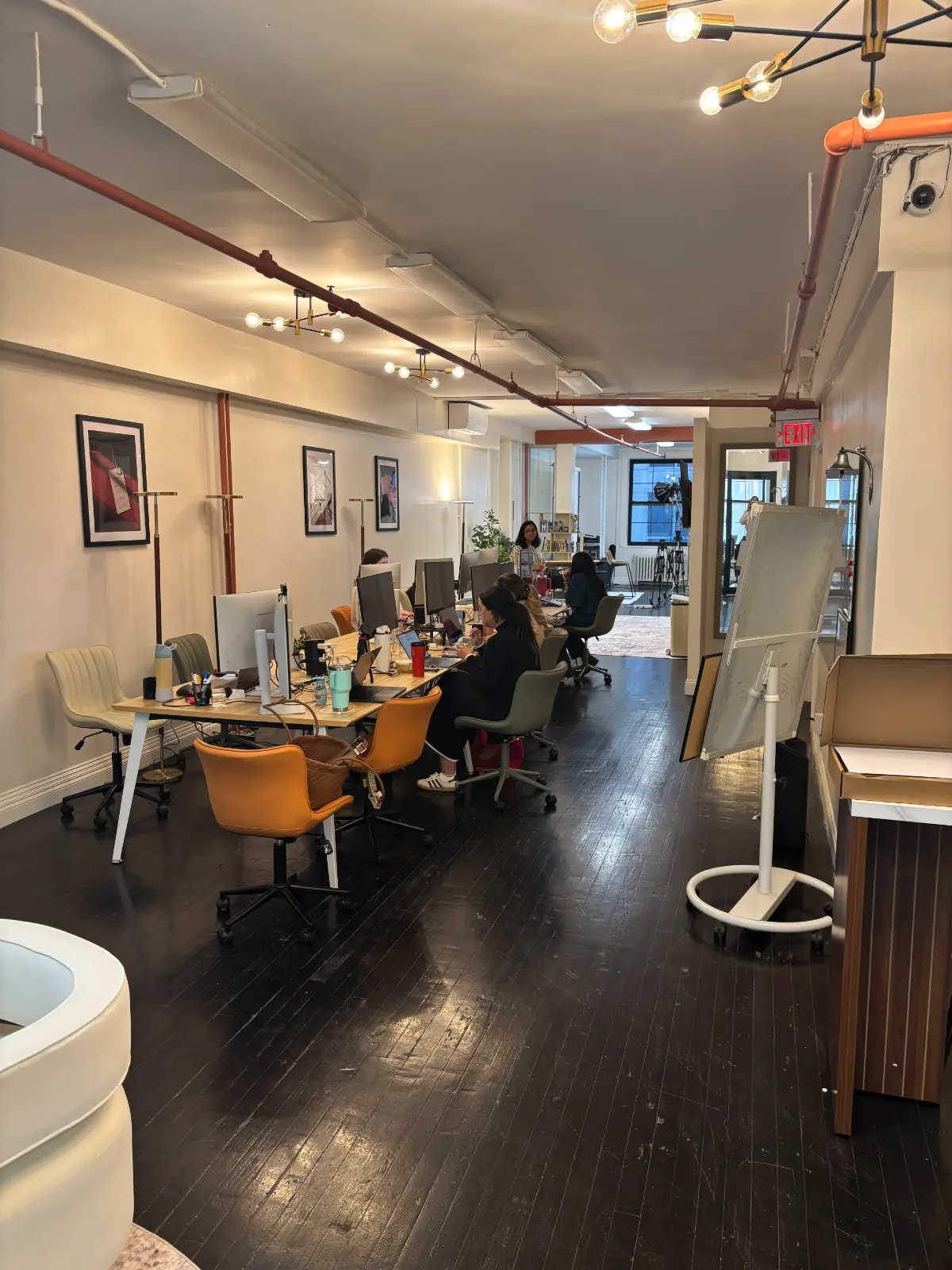
Janitorial cleaning covers the daily upkeep of a building, such as trash removal, restroom restocking, vacuuming, and wiping the surfaces people touch all day. Commercial cleaning in NYC covers the heavy work that happens on a schedule of months, not days, like floor stripping, carpet extraction, high dusting, and post-construction dust removal.
One service keeps your space presentable from Monday to Friday. The other resets the building a few times a year. Most offices in New York need both, and the confusion between the two is where budgets get wasted.
Janitorial Cleaning Means the Work That Repeats Every Shift
Janitorial work follows a rhythm. A crew arrives on a set schedule, moves through the same route, and handles the tasks that build up within hours of the last visit. This is the service most property managers picture when they think of a cleaner in the building.
The scope stays predictable because the mess is predictable. A conference room used four times a day gets dirty in the same way every day. Restrooms in a busy Midtown office need attention whether you clean them or not.
What a Janitorial Crew Handles on a Normal Visit
- Emptying trash and recycling from desks, kitchens, and common areas
- Vacuuming carpets and sweeping or mopping hard floors
- Wiping desks, counters, door handles, light switches, and elevator buttons
- Restocking soap, paper towels, and toilet paper
- Cleaning and disinfecting restrooms and breakroom sinks
- Tidying lobbies, reception areas, and shared corridors
The CDC guidance on cleaning and disinfecting points out that high-touch surfaces should be cleaned at least once a day, and more often in spaces with heavy foot traffic. That single line explains why janitorial cleaning in NYC exists as a separate service with its own schedule. You cannot cover a daily requirement with a quarterly visit.
Read More: Types of Commercial Cleaning Services in NYC
Commercial Cleaning Covers the Work a Daily Crew Cannot Reach
Commercial cleaning in NYC starts where the daily routine stops. These are tasks that need machines, chemicals, drying time, and operators who know how to run the equipment without damaging your surfaces. A janitor with a vacuum and a mop bucket cannot strip a wax finish or pull embedded soil out of carpet fibers.
Frequency changes the whole picture here. Some of this work happens once a quarter. Some are scheduled once a year. Some schedule once, after a renovation or a flood, and then never again until the next project.
The Tasks That Need Machines and Trained Operators
- Stripping, sealing, waxing, and burnishing hard floors
- Hot water carpet extraction and spot treatment on heavy stains
- Upholstery cleaning on chairs, sofas, and fabric partitions
- High dusting on vents, ledges, ceiling fixtures, and exposed ductwork
- Interior and exterior window washing above ground level
- Post-construction dust removal after demolition or a build-out
- Deep sanitation after an illness outbreak or a plumbing failure
Most of this work runs after hours because it takes space, noise, and drying time. You cannot strip a lobby floor at 11 a.m. on a Tuesday with people walking through it.
Scope, Frequency, Equipment, and Cost: Where the Two Services Split
The four differences below are what actually separate the services on a proposal. Everything else is a detail.
| Factor | Janitorial Cleaning | Commercial Cleaning |
| Frequency | Daily, nightly, or a few times a week | Monthly, quarterly, annually, or one time |
| Scope | Surface upkeep and restocking | Deep cleaning of floors, fabric, glass, and air paths |
| Equipment | Vacuums, carts, microfiber, standard disinfectants | Floor machines, extractors, HEPA units, pressure washers |
| Billing | Recurring monthly contract | Per project, per square foot, or per visit |
| Timing | Around your business hours | After hours or weekends |
A janitorial contract gives you a stable line item every month. A commercial cleaning job gives you a one-time invoice tied to a scope of work. Property managers who mix the two in their heads end up asking a daily crew to do quarterly work, then wondering why the floors never look better.
Why the Cost Structure Feels So Different on Each Quote
A janitorial quote is built on labor hours. The math runs on how many cleaners, how many nights, and how many square feet they cover per hour. Prices stay steady because the work stays steady.
A commercial cleaning quote is built on the job itself. Stripping and waxing 4,000 square feet of vinyl tile in a Manhattan lobby carries a different number than extracting carpet in a Brooklyn co-working floor. The variables are surface type, machine time, chemical cost, and how much of the space has to sit empty while it dries.
This is why a low janitorial rate sometimes hides a problem. If nobody has extracted the carpet in three years, the daily vacuum is only removing what sits on top. The soil underneath keeps grinding the fibers down until you are replacing carpet instead of cleaning it. Regular carpet cleaning on a six to twelve month cycle costs a fraction of a full replacement.
The Money Sitting Behind Both Services
Cleaning shows up as a cost on your P&L, so it gets treated as a cost. The numbers point somewhere else.
Data compiled in the ISSA Value of Clean report links a maintained, hygienic workplace with roughly 46% fewer sick days. Absenteeism costs US employers an estimated $225.8 billion a year, which works out to about $1,685 per employee. The Bureau of Labor Statistics put the national absence rate at 3.2% in 2024, with illness and injury leading the causes.
Run that against a staff of 30 in a Manhattan office. A drop of even a few sick days per person changes a number that dwarfs your cleaning contract. Daily disinfection of high-touch points is what moves that figure, and that is janitorial work. Meanwhile, the deep sanitation that resets a space after an outbreak is commercial work. The two pull in the same direction from different angles.
Which Service Does Your Building Need Right Now?
The answer depends on your traffic, your industry, and what your floors have been through.
Offices and co-working floors
Steady foot traffic, shared desks, and a lot of hands on the same surfaces. Daily janitorial coverage handles most of it. Add carpet extraction twice a year and window washing on a quarterly cycle. Co-working spaces run heavier because the desks turn over constantly.
Medical offices and clinics
Higher standards, and the cleaning has to be documented. Daily disinfection of exam rooms is the baseline, and medical office cleaning also brings periodic deep sanitation into the plan. A hard floor in a treatment room needs stripping and sealing on a tighter schedule than a back office.
Restaurants and retail
Grease, spills, and public restrooms. Daily janitorial work keeps you open. Quarterly floor cleaning with a machine keeps the tile from going grey and slippery. Restaurants often need both on the same week.
Buildings after construction or renovation
This is commercial work with no janitorial component at all. Sawdust and drywall powder settle into vents, light fixtures, and every horizontal surface in the space. A standard vacuum spreads it. Post-construction cleaning uses HEPA filtration and a top-down sequence so the dust leaves the building instead of moving around it.
Warehouses and storage facilities
Low foot traffic, so daily coverage rarely makes sense. A biweekly or monthly janitorial visit paired with an annual deep clean fits the usage.
How Both Services Fit Into One Cleaning Plan
Most NYC buildings run a hybrid. Janitorial coverage handles Monday through Friday. Commercial cleaning gets scheduled into the calendar at set points in the year.
A plan for a mid-size office might look like this:
- Nightly: trash, restrooms, vacuum, high-touch disinfection
- Weekly: breakroom appliance interiors, glass doors, baseboards
- Quarterly: interior windows, high dusting, carpet spot treatment
- Twice a year: full carpet extraction and upholstery cleaning
- Annually: floor strip and wax, vent and ledge cleaning
Setting this up in advance costs less than reacting to it. A carpet that gets extracted on schedule takes an hour of machine time. The same carpet, after four years of neglect, needs multiple passes and still holds the traffic lanes. Buildings that book the deep work only after a client complains pay for the delay twice.
Does Any of This Apply to Apartment Buildings and Homes?
The line holds in residential settings, with different names on it. Building cleaning in a condo or apartment complex is janitorial work: lobbies, hallways, elevators, mailrooms, laundry rooms, and stairwells on a daily or weekly rotation. The tenants never see the crew, but they notice within two days of a missed visit.
The deeper residential work follows the commercial pattern. Hallway carpet extraction, lobby floor refinishing, and window washing on shared glass all need machines and a scheduled slot. Move-in and move-out cleaning between tenants is a project with a start and an end, priced per unit rather than per month. A landlord who books a daily porter and assumes the hallway carpet is covered will find out otherwise when a unit goes on the market.
For a private home, the same logic applies at a smaller scale. Weekly housekeeping is the routine layer. Carpet and upholstery deep cleaning is a periodic process. Neither one replaces the other.
Common Questions About Janitorial and Commercial Cleaning
What is the main difference between commercial cleaning and janitorial cleaning?
Commercial cleaning covers deep, periodic services like carpet shampooing, window washing, and floor waxing. Janitorial cleaning is routine daily upkeep such as trash removal, restroom sanitizing, and vacuuming. Most businesses need both to stay fully maintained.
Is janitorial cleaning cheaper than commercial cleaning?
Yes, janitorial services typically cost less since they involve recurring, lighter tasks performed daily or weekly. Commercial cleaning costs more due to specialized equipment and deep-cleaning labor. Pricing depends on square footage and service frequency.
How often should a business schedule commercial cleaning vs janitorial service?
Janitorial cleaning usually happens daily or several times a week to maintain basic hygiene. Commercial cleaning is scheduled monthly or quarterly for deep sanitation. Combining both keeps facilities consistently clean and code compliant.
Can one company handle both janitorial and commercial cleaning needs?
Yes, many cleaning companies offer bundled packages covering daily janitorial tasks and periodic deep commercial cleaning. This ensures consistent quality and a single point of contact. It also often reduces overall service costs.
Which type of cleaning is required for offices, retail stores, or warehouses?
Most offices and retail spaces need daily janitorial service for cleanliness and deep commercial cleaning a few times a year. Warehouses often require more frequent commercial cleaning due to dust and debris buildup. The right mix depends on foot traffic and industry type.
Also Read: Daily vs Weekly Commercial Cleaning: Which Schedule Does Your NYC Business Need?
Stop Paying Twice for a Cleaning Plan That Was Never Built Right
The buildings that overspend are the ones where nobody drew the line between daily upkeep and deep work. The floors dull out, the carpet goes flat in the traffic lanes, and the fix becomes a replacement invoice instead of a cleaning invoice. That gap has a cost, and it grows every quarter it goes unaddressed.
At American Janitorial Services NYC, we build both layers into one plan so nothing falls between them. We handle janitorial cleaning in NYC on the schedule your operation runs on, and we bring the machines, the HEPA equipment, and the trained crews for the commercial cleaning in NYC work that keeps your floors, carpets, and glass from wearing out early. We have been cleaning New York commercial spaces since 2007, across 3,500 completed projects, with a team of 30 and a 5-star rating from more than 145 reviews.
American Janitorial Services works around your business hours, brings its own supplies, and uses plant-based products that are safe for occupied indoor spaces.
Tell us what your building has, and we will tell you what it needs. Get in touch with American Janitorial Services for a walkthrough and a written quote.