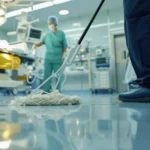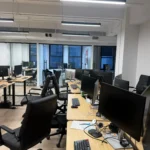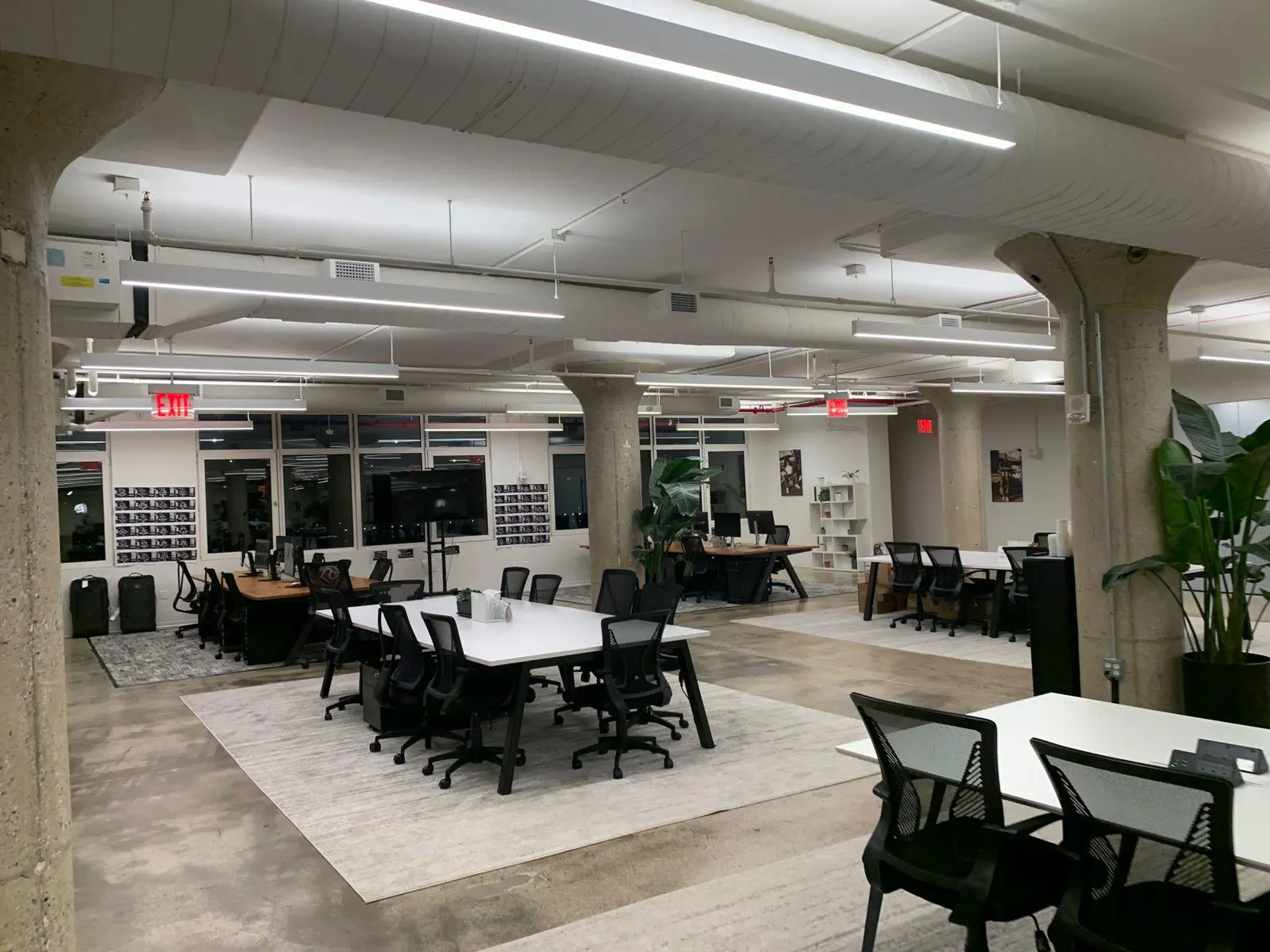
Most offices need both. Routine cleaning runs daily to weekly and handles trash, restrooms, high-touch disinfection, and vacuuming. Deep cleaning runs monthly to quarterly and removes embedded soil through carpet extraction, floor refinishing, grout scrubbing, and high dusting. Routine work protects appearance and daily hygiene; deep work protects air quality, odor control, and flooring lifespan.
You walk in on Monday and the office looks fine. Bins are empty, desks are wiped, the glass is clear. Then you notice the grey path worn down the middle of the hallway carpet, and the break room carries a stale smell that returns by ten no matter how often someone opens a window.
That gap is where most businesses get confused. Routine work holds the line day to day; deep work resets what daily wiping can never reach. A proper office cleaning program in NYC runs both on different clocks, and the right proportion depends on your building.
This guide covers what each service includes, how often each should run, what factors change the mix for your space, and the cost math behind the decision.
The Difference Between the Two, Line by Line
Routine cleaning manages what people leave behind today. Deep cleaning removes what has been building since the last deep clean.
What routine cleaning covers
This is the recurring service that runs daily, several times a week, or weekly depending on your headcount and traffic.
- Trash and recycling removal with liner replacement
- Restroom service, restocking, fixture wiping, and floor mopping
- High-touch disinfection across door handles, light switches, elevator buttons, and shared equipment
- Vacuuming carpeted traffic areas and dust mopping hard floors
- Break room and pantry surface sanitizing, sink cleaning, and appliance exterior wiping
- Desk and workstation wiping where the scope allows it
- Interior glass spot cleaning, reception tidying, and conference room reset
What deep cleaning covers
This runs on a longer cycle and uses equipment that a nightly crew does not carry on a routine visit.
- Hot water carpet extraction that pulls soil, allergens, and staining out from below the pile
- Hard floor stripping and refinishing, or scrub and recoat, followed by burnishing
- Grout scrubbing in restrooms and pantries, plus descaling of fixtures
- High dusting across ceiling corners, light fixtures, HVAC supply and return grilles, and the tops of partitions
- Upholstery extraction on chairs, sofas, and fabric panels
- Break room appliance interiors, including the refrigerator, microwave, and cabinet interiors
- Baseboards, door frames, chair bases and casters, window sills, blinds, and the surfaces beneath and behind equipment
The simplest way to hold the distinction is this. Routine cleaning is about appearance and daily hygiene. Deep cleaning is about soil load, Odor source, and asset life.
Read More: Daily vs Weekly Commercial Cleaning: Which Schedule Does Your NYC Business Need?
Why an Office Can Look Clean and Still Fail a Walkthrough
Soil does not stay on the surface waiting to be wiped. In a carpeted office, particles work down into the pile and settle against the backing where a vacuum cannot lift them. The carpet still looks acceptable from standing height while holding several pounds of embedded material per hundred square feet.
The same pattern shows up on hard floors. Wax builds in layers, traps dirt inside the finish, and turns the surface cloudy. Mopping over that finish spreads a thin film rather than removing anything, so the floor gets duller each week while the cleaning log shows the work was done.
Odor follows the same logic. When a break room smell returns within an hour of opening, the source is rarely the countertop. It usually comes from the carpet beneath the table, the grout line at the base of the cabinet, the drip tray under the coffee machine, or a return air grille carrying a dust layer.
Bacteria loads reinforce the point. Research published in occupational medicine literature has noted that a typical office desk carries more than ten million bacteria, a figure far above what most people assume for a surface that gets wiped several times a week. Wiping addresses the top layer. Keyboards, phone handsets, chair arms, and the underside of shared desks hold the rest.
This is why an office cleaning service built on routine visits alone slowly loses ground. Each week the crew does the job correctly, and each week the baseline drops slightly, until someone finally says the office feels dirty without being able to name what changed.
How Often Each One Should Run in a NYC Office
Frequency is where most contracts either work or fail. The pattern below reflects what industry cleaning standards recommend for commercial office space.
Daily or five days per week for occupied floors
Trash removal, restroom full service, break room sanitizing, high-touch disinfection, vacuuming main traffic lanes, dust mopping hard floors.
Two to three times per week
Wet mopping hard floors, vacuuming low-traffic private offices, detailed dusting of open surfaces.
Weekly
Interior glass, spot carpet treatment, detail wiping of partitions and shared equipment, conference room deep wipe.
Monthly
High dusting of vents and light fixtures, machine scrubbing of hard floors, floor detail along edges and corners, appliance exterior degreasing.
Quarterly
Carpet hot water extraction in traffic areas, hard floor stripping and refinishing or scrub and recoat, restroom grout scrubbing, upholstery extraction, window cleaning.
Annually or twice per year
Full floor restoration, complete carpet extraction across the entire footprint including private offices, HVAC grille deep cleaning, blind and ceiling-level work.
High-traffic lobbies and reception areas in Manhattan buildings often need carpet extraction closer to every one to three months rather than quarterly. Low-occupancy professional offices can stretch a full deep clean to twice a year while keeping quarterly attention on the pantry and restrooms.
What Decides the Right Mix for Your Building
Two offices of identical square footage can need very different programs. These are the factors that move the schedule.
Headcount and visitors. An office with 30 staff and no client traffic behaves nothing like a 30-person office running interviews and client meetings all week. Footfall carries soil in, and every visitor adds to the load without adding to the cleaning budget.
Floor level and street proximity. Ground floor and second floor spaces in Manhattan collect far more street grit, salt in winter, and construction dust than a space on the twentieth floor. Entry matting helps, and it also needs its own extraction schedule.
Flooring type. Carpet hides soil and releases odor. Vinyl composition tile shows every scuff and needs a finish program. Natural stone in a lobby needs honing, polishing, and sealing rather than stripping. Each surface sets its own deep cleaning calendar.
Industry and compliance. Medical suites, food handling areas, and childcare spaces carry cleaning obligations that a standard office does not. Those requirements raise both the routine frequency and the deep cleaning scope.
Food at desks. Offices where staff eat at workstations generate crumbs, spills, and pest pressure well beyond what a pantry-only office produces.
HVAC condition. An older system with dusty grilles pushes particles back into the room after every cleaning, which shortens the useful life of each visit.
Buildings with heavy circulation need a program built around traffic patterns rather than a flat schedule, and our breakdown of how commercial cleaners handle high-traffic office spaces covers how those zones get mapped and prioritized.
The Cost Math Most NYC Businesses Skip
Cleaning gets treated as overhead, and that framing hides the numbers on both sides of the ledger.
Start with absenteeism. The CDC Foundation reports that productivity losses linked to absenteeism cost U.S. employers $225.8 billion each year, or roughly $1,685 per employee. For a 50-person New York office, that represents more than $84,000 annually.. Cleaning will never remove all of it, since illness comes from many sources. Shared surfaces are one of the few sources a business can directly control.
Then look at asset life. A commercial carpet extracted on a quarterly schedule commonly lasts 10 to 15 years. The same carpet with vacuuming alone tends to need replacement in five to seven. Replacing carpet across a 5,000 square foot office costs many times more than the extraction visits that would have prevented it.
Hard floors follow the same pattern. A floor refinished on schedule keeps its protective coating intact. A neglected floor eventually needs stripping down to the bare substrate, and that restoration runs three to four times the cost of routine refinishing. Deferring the deep clean does not save the money. It moves the money to a larger invoice later.
There is a third cost that never appears on a spreadsheet. Clients notice worn carpet and cloudy floors in the first ten seconds of a visit, and staff notice a stale pantry every single day. Neither group files a complaint. Both form an opinion.
Fitting Deep Cleaning Around a Working Office in New York
Scheduling is where New York adds complications that most national advice skips.
Deep work needs the space empty. Carpet extraction leaves fibers damp for several hours, and floor stripping and refinishing need a full cure window before foot traffic returns. In a Manhattan building, that means coordinating with building management for after-hours access, freight elevator time, and a certificate of insurance naming the building owner and managing agent.
Most offices handle this in one of three ways. Overnight work suits businesses that empty out by seven in the evening, and overnight cleaning keeps the routine service running while the deep tasks happen in the same window. Weekend work suits floors that need a longer drying period. Holiday weeks in late December and summer slow periods give the widest window for full floor restoration across an entire footprint.
Splitting the deep clean by zone also works well. Rather than closing the whole office, the crew handles reception and the north wing one weekend and the south wing the next. Carpet and upholstery work often runs on this rotation, and carpet cleaning in the highest-traffic lanes can happen more often than the full floor without raising the total cost much.
Floor programs benefit from the same phasing. Scheduling floor cleaning as scrub and recoat two or three times before a full strip keeps the finish healthy and stretches the interval between the heavier and more disruptive visits.
Questions to Settle Before You Sign a Cleaning Contract
The single most common source of frustration is a contract where deep cleaning was assumed by one side and excluded by the other. These questions prevent that.
- Is deep cleaning included in the monthly rate, or billed separately as a project?
- Which specific tasks fall under deep cleaning, listed by name rather than described as extra services?
- What frequency is written into the agreement for carpet extraction, floor refinishing, and high dusting?
- Who supplies equipment and chemicals, and what products are used around staff with allergies?
- How is quality checked, and does the provider run inspections or checklists a manager can review?
- What insurance coverage is carried, and can certificates be issued to the building?
- How quickly can the schedule change when your headcount or floor plan changes?
Getting these written into the scope turns an office cleaning service from a monthly invoice into a maintenance program with a measurable standard.
Book a Walkthrough Before the Next Client Sees Your Lobby
Every month you postpone the deep work, the baseline drops a little further. The carpet lane gets darker, the floor finish gets cloudier, the pantry smell settles in, and one day a client walks through reception and forms an opinion about your business that has nothing to do with your work. Replacing that carpet later costs many times what maintaining it would have cost.
American Janitorial Services has served New York City commercial properties since 2007, with more than 3,500 completed projects, a team of trained janitors, professional-grade equipment including HEPA vacuums, and plant-based cleaning solutions that are non-toxic and biodegradable. We handle routine schedules and deep cleaning under one company, so you are not coordinating separate vendors for your carpets, your floors, and your nightly service.
Tell us your square footage, headcount, flooring types, and building access hours, and we will map a schedule that shows exactly which tasks run daily, monthly, and quarterly. Contact us for a free quote on office cleaning in NYC, and stop guessing whether your space is actually clean or only looks that way.
Frequently Asked Questions
How often should an office be deep cleaned?
Most offices need deep cleaning quarterly, covering carpet extraction, floor refinishing, grout scrubbing, and high dusting. High-traffic lobbies and reception areas often need carpet extraction every one to three months. Low-occupancy professional offices can stretch to twice yearly, provided pantries and restrooms still receive quarterly attention.
What is the difference between deep cleaning and regular cleaning?
Regular cleaning manages daily soil, trash, restrooms, high-touch disinfection, vacuuming. Deep cleaning removes accumulated soil using equipment nightly crews don’t carry: hot water carpet extraction, floor stripping and refinishing, grout scrubbing, upholstery extraction. Regular cleaning protects appearance and daily hygiene. Deep cleaning protects air quality, odor control, and flooring lifespan.
How much does office deep cleaning cost in NYC?
Pricing depends on square footage, flooring types, and building access hours rather than a flat rate. Carpet extraction, floor refinishing, and grout work are each priced separately by area. Deferring deep cleaning doesn’t reduce cost, neglected floors eventually require full stripping to bare substrate, running three to four times routine refinishing.
Is deep cleaning included in a commercial cleaning contract?
Often not. Many contracts cover routine service only and bill deep cleaning as separate projects. Before signing, confirm in writing which specific tasks count as deep cleaning, how frequently carpet extraction and floor refinishing run, and whether those costs sit inside the monthly rate or outside it.
Why does my office still smell after cleaning?
Persistent odor usually comes from below the surface, not the countertops. Common sources include carpet beneath break room tables, grout lines at cabinet bases, drip trays under coffee machines, and dust layers on HVAC return grilles. Routine wiping can’t reach these they require extraction, grout scrubbing, and high dusting.