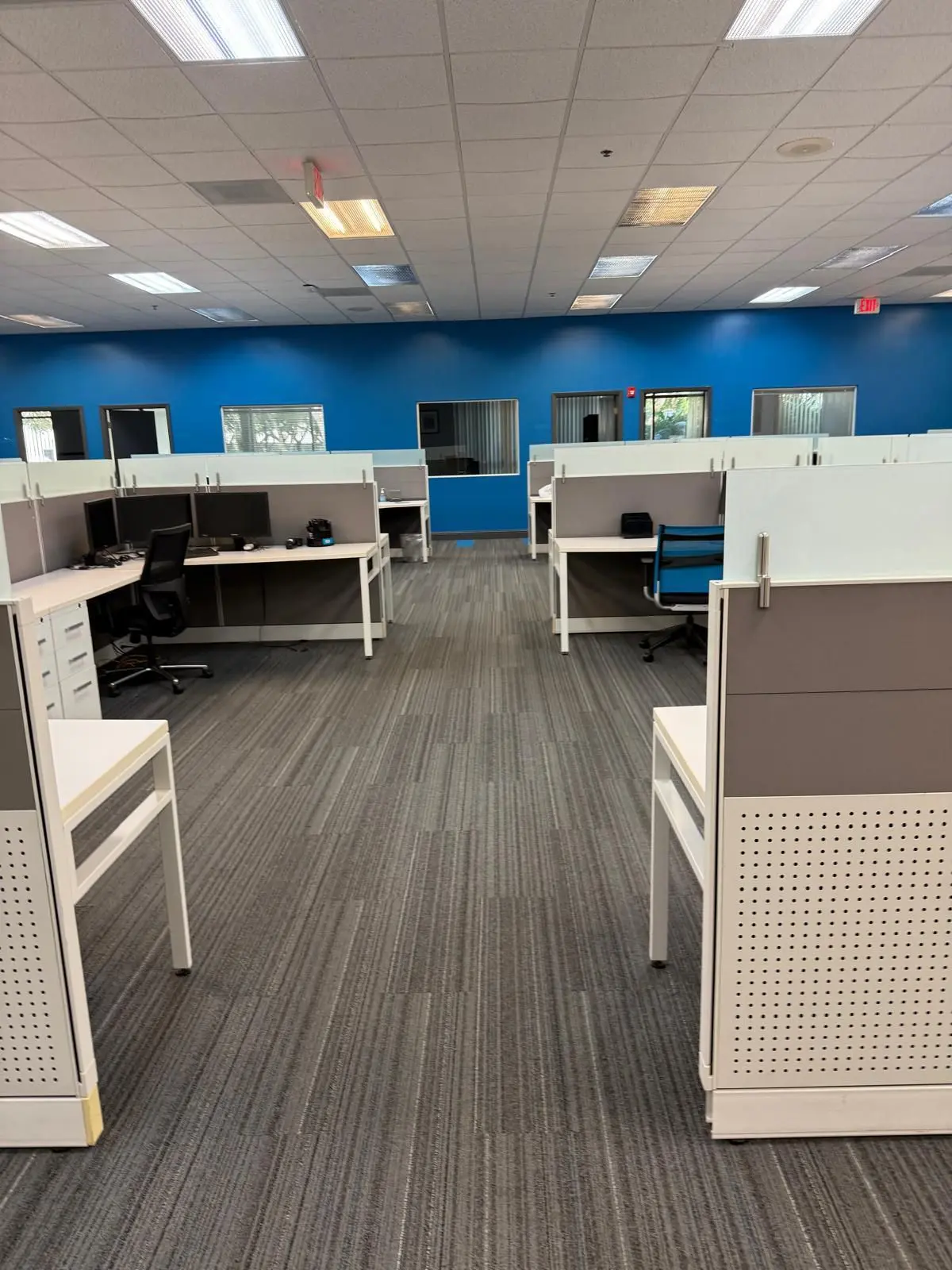
A busy office in midtown Manhattan can see 1,500 to 5,000 people pass through the front door in a single workday. Every set of shoes carries dirt onto the carpet, every handshake spreads germs onto door handles, and every coffee cup leaves a ring on the conference room table. Without a steady cleaning plan, the building goes from polished on Monday to worn down by Thursday.
This is why high-traffic offices need professional commercial cleaning crews who know how to keep a building presentable through the heaviest weeks of the year.
What Counts as a High-Traffic Office Space?
A high-traffic office is any workplace where the daily flow of people, deliveries, and visitors stays above what a small in-house cleaning team can manage on its own. Examples include corporate headquarters with 500-plus staff, co-working spaces with rotating tenants, law firms with constant client meetings, financial trading floors, and government buildings with public walk-ins.
The average Class A office building in NYC handles thousands of foot movements per day during peak hours, which adds up to a level of wear that standard cleaning routines cannot keep up with over a full week.
Read More: What Industries Need Commercial Cleaning Services the Most?
Why High-Traffic Offices Need a Different Cleaning Approach
A small office with 20 staff can manage with a once-a-week wipe-down. A high-traffic floor with hundreds of people cannot. Soil tracked in from the street, fingerprint smudges on glass walls, kitchen spills, restroom usage, and conference room churn all build up much faster. The Centers for Disease Control and Prevention notes that high-touch surfaces in busy work settings can hold viruses and bacteria for hours, and proper cleaning cuts down on workplace illness rates.
For an NYC business owner, a clean office is also a business image issue. A client who walks into a lobby with dusty plants, smudged glass, and stained carpet rarely sees the building as a serious operation, regardless of what the company actually does inside.
How Professional Cleaners Tackle High-Traffic Office Spaces
Every reliable cleaning crew follows a planned process built around the building’s flow and use pattern.
Zone-Based Cleaning Plans
A high-traffic office is split into zones based on usage. The lobby, elevator bank, restrooms, and main hallways get the highest frequency. Open floor seating gets a mid-level routine. Storage rooms and quiet corners get the lightest cleaning.
This zone setup means the highest-use spots never go more than a few hours without attention during peak shifts.
High-Touch Surface Focus
A trained team knows the surfaces that need wiping multiple times per day:
- Door handles, push plates, and elevator buttons
- Restroom faucets, soap dispensers, and stall locks
- Reception desks, sign-in screens, and visitor pens
- Conference room tables, light switches, and remote controls
- Kitchen counters, coffee machines, and microwave handles
- Shared printers, mouse pads, and keyboard trays
A disinfectant pass on these spots two to four times a day cuts the spread of common cold and flu viruses across the staff base.
Floor Care for Heavy Foot Traffic
Carpet and hard floors in high-traffic offices wear out two to three times faster than in low-traffic spaces. A professional floor cleaning plan for a busy office covers daily vacuuming with HEPA-filter machines, weekly damp mopping of hard floors, monthly carpet spot treatment, and quarterly deep extraction.
Skipping the deep clean steps causes carpet fibers to mat down within a year, which leads to a full replacement bill instead of a cleaning bill on the books.
Restroom Maintenance Through the Day
A single high-traffic office restroom can see 200 to 600 uses per day. A pro crew runs spot checks every 2 to 3 hours, restocks paper goods, wipes down sinks, refills soap dispensers, and removes overflow trash before the next rush hits. Skipping mid-day checks is the fastest way to drag down the staff experience of the whole building.
Trash and Recycling Logistics
A 200-person floor can fill 80 to 120 trash bins by 5 p.m. Pro crews schedule pickups in waves rather than waiting until the end of the day, which keeps the bins from overflowing, smells from building up, and pests from finding a feeding ground inside the building.
Tools and Equipment Built for Busy Offices
A standard household vacuum and a bottle of multi-purpose spray cannot keep up with a high-traffic floor. Pro crews bring in HEPA backpack vacuums that pull out fine dust and allergens, microfiber flat mops with color-coded heads to avoid cross-contamination between bathrooms and kitchens, electrostatic sprayers that coat large surfaces in disinfectant fast, auto-scrubbers for lobby floors and large open spaces, carpet extractors with hot water and stain treatment chemistry, and HEPA air movers for post-cleanup drying.
The right tools cut the cleaning time in half and lift the finish quality at the same time.
After-Hours vs Daytime Cleaning
Most NYC offices prefer their full deep clean to happen overnight or on weekends, so daytime work stays uninterrupted. A dedicated daytime porter then handles spot work, restroom checks, and trash pulls through business hours. This split shift covers both the visible cleanliness and the hidden deep work without ever pulling a desk worker away from their screen.
A planned office cleaning contract usually combines both schedules into one monthly rate for the building.
Also Read: Benefits of Professional Janitorial Services for Offices in NYC
Common Cleaning Mistakes in High-Traffic Offices
A few mistakes pop up over and over when buildings try to handle their own cleaning or cut corners on a vendor contract:
- Using one rag across multiple bathrooms, which spreads germs from floor to floor
- Skipping disinfectant dwell time, which means the chemical never kills what it touches
- Vacuuming on a low-power setting, which lifts only the top layer of dust
- Cleaning floors before dusting shelves, which drops debris on a fresh-mopped surface
- Forgetting to log restroom checks, which leads to missed mid-day rounds
- Using cheap paper goods that run out faster and clog dispensers
These mistakes turn what looks like a budget cut into a recurring problem that costs the building in tenant complaints, sick days, and reputation damage.
Book a Cleaning Crew Built for High-Traffic Office Demand
A clean office is not a luxury for an NYC business. It is a daily piece of the brand image, the staff health plan, and the tenant retention strategy. Letting a high-traffic floor slide for even a few weeks creates a backlog of dust, wear, and smell that takes far more work to undo than to prevent in the first place.
At American Janitorial Services NYC, we handle commercial cleaning and office cleaning for high-traffic buildings, co-working spaces, corporate floors, and retail offices across Manhattan, Brooklyn, Queens, and the Bronx. Reach out and book a walkthrough before the next busy week stretches your in-house team past its limit.
Frequently Asked Questions
How do commercial cleaners handle high-traffic office spaces?
Commercial cleaners use scheduled deep cleaning routines, industrial-grade disinfectants, and high-efficiency equipment to maintain hygiene in busy office environments. They focus on high-touch surfaces, restrooms, lobbies, and shared spaces that accumulate dirt and bacteria fastest.
How often should high-traffic office spaces be professionally cleaned?
High-traffic office spaces should receive daily cleaning for restrooms, entrances, and shared surfaces, with deep cleaning scheduled weekly or monthly. The right frequency depends on employee count, foot traffic volume, and the nature of the business.
What areas do commercial cleaners prioritize in a busy office?
Commercial cleaners prioritize restrooms, reception areas, elevator buttons, door handles, break rooms, and workstations in high-traffic offices. These zones collect the most germs and require consistent disinfection to maintain a healthy work environment.
What cleaning products and equipment do commercial cleaners use in offices?
Commercial cleaners use EPA-approved disinfectants, microfiber cleaning systems, HEPA-filter vacuums, and electrostatic sprayers for thorough office sanitation. These tools remove allergens, bacteria, and viruses more effectively than standard household cleaning products.
What is the difference between daily janitorial service and commercial deep cleaning for offices?
Daily janitorial service covers routine tasks like trash removal, vacuuming, and surface wiping to maintain basic cleanliness. Commercial deep cleaning goes further by sanitizing hard-to-reach areas, stripping floors, cleaning vents, and targeting buildup that regular cleaning misses.