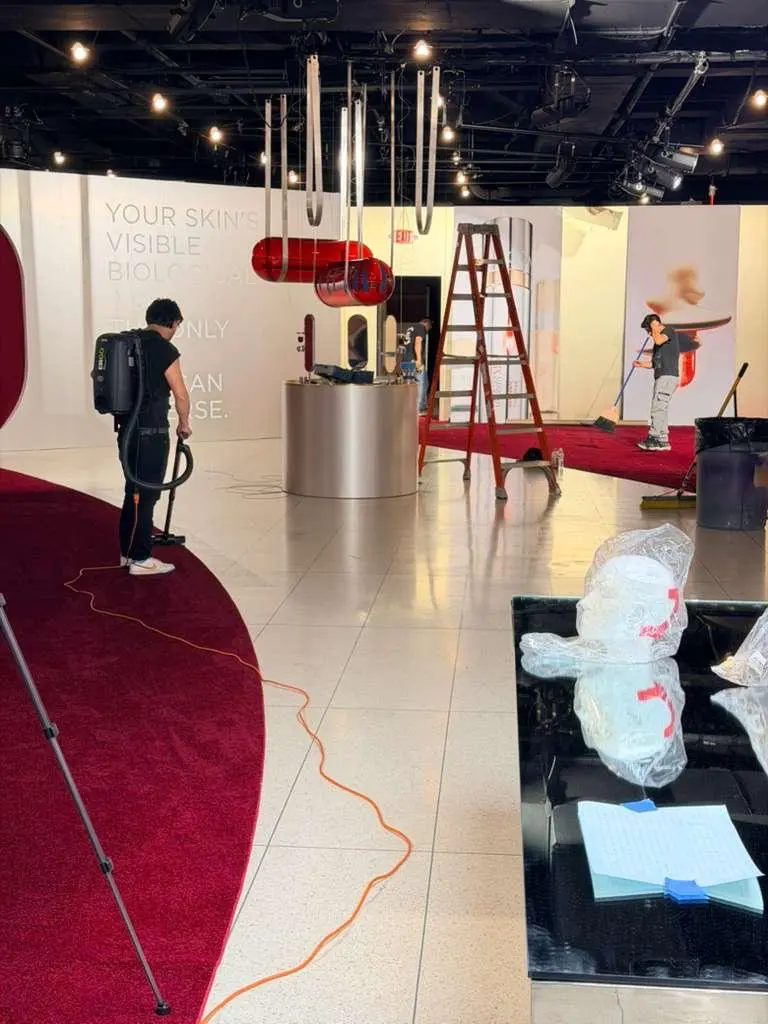
Cleaning crews often have office keys, alarm codes, and a few hours alone with equipment after everyone goes home. Most business owners hand over that access without asking what happens if a cleaner gets hurt on the job or something goes missing overnight. For a commercial cleaning company in NYC, that answer usually depends on whether it’s insured and bonded.
It matters because insurance and bonding decide who pays when something goes wrong. Insurance covers injuries, property damage, and accidents tied to the cleaning work. Bonding protects the client if a member of the cleaning staff steals from the business. Without both in place, those costs can shift to the client’s business, landlord, or insurance policy.
What Does Insured and Bonded Mean for a Cleaning Company?
Insured and bonded means a cleaning company carries liability and workers’ compensation insurance and also holds a janitorial bond against employee theft. Each one protects a different party in a different situation.
What Insured Means
Being insured usually means the company carries general liability and workers’ compensation policies. General liability pays for injuries to other people and damage to client property caused by the cleaning work. Workers’ comp pays medical bills and lost wages when one of the company’s own cleaners gets hurt on the job. Together, they keep accident costs with the cleaning company’s insurer instead of the client.
What Bonded Means
Bonded means the company holds a janitorial bond, sometimes called a fidelity bond. It reimburses the client if one of the company’s employees steals money, equipment, or property on the job. Some bonds pay only after the theft is proven, sometimes through a court conviction. It’s worth knowing how a claim works before there’s ever a need to file one.
Here’s a quick side-by-side of what each one does.
| Coverage | What It Protects Against | Who It Protects | Everyday Example |
|---|---|---|---|
| General liability | Injuries to others and property damage | The client, visitors, and the building | A visitor slips on a freshly mopped lobby floor |
| Workers’ compensation | Injuries to the cleaning staff | The cleaner, with fewer claims reaching the client | A cleaner strains their back lifting heavy trash bins |
| Janitorial bond | Theft by the cleaning company’s employees | The client’s business | A laptop goes missing after the overnight shift |
Policies a Commercial Cleaning Company in NYC Should Carry
Insured and bonded is the starting point, but New York adds a few requirements of its own. Here’s the full list of policies worth expecting from a cleaning partner working in an office or building.
- General liability: This policy covers injuries to third parties and damage to client property. Limits of $1 million per occurrence and $2 million aggregate are common for cleaning businesses. That means up to $1 million for any single claim and up to $2 million for all claims in a policy year.
- Workers’ compensation: It covers medical care and lost wages for cleaners hurt on the job. New York requires it for nearly every business with employees.
- Disability and Paid Family Leave: Virtually all employers in New York State must carry it. It pays employees for off-the-job illness, injury, and family leave. Having it in place shows the company follows state employer rules in full.
- Janitorial bond: The bond reimburses clients for theft by the company’s staff. Its amount should reflect the value of what’s in the office.
- Commercial auto: Company vehicles used to reach job sites or haul equipment fall under this policy.
- Umbrella liability: This policy pays above the general liability limit once that limit runs out. Larger buildings and multi-tenant properties often ask for it.
Proper insurance doesn’t cost a cleaning company as much as many people assume. Insureon reports that janitorial businesses pay an average of $50 a month for general liability with limits of $1 million per occurrence. Workers’ comp for the same group averages about $143 a month. Skipping these policies saves a vendor a little each month but leaves the client exposed if anything goes wrong.
Did You Know?
New York’s Workers’ Compensation Board can fine an uninsured employer up to $2,000 for every 10 days without coverage. By the time the first penalty notice arrives, the total may already be more than $12,000. The Board can also issue a stop-work order. For you, that can mean losing your cleaning service in the middle of a contract.
If your building manager or landlord is already asking for vendor paperwork, it helps to work with a team that has it ready. American Janitorial Services is insured and bonded, with every cleaner vetted before they join. Proof of insurance can come with the quote, before anyone steps inside.
Who Pays When Something Goes Wrong?
When the cleaning company is properly covered, its insurer or bond handles the claim. If it isn’t, the tenant, the landlord, or the tenant’s own insurer may end up paying.
These everyday situations show how the outcome changes.
| What Happens | If the Company Is Insured and Bonded | If It Isn’t |
|---|---|---|
| Cleaner slips on a wet floor and breaks a wrist | Workers’ comp pays medical bills and lost wages | The injured worker may pursue the tenant or the building owner |
| Visitor trips over a vacuum cord in an office hallway | The cleaning company’s general liability handles the claim | The claim can land on the tenant’s own policy and raise its premium |
| Floor machine scratches the building’s marble lobby | General liability pays the building’s repair costs | Many commercial leases let the landlord bill tenants for damage their vendors cause |
| Laptop disappears after the overnight shift | The bond can reimburse the loss once the claim is approved | The business absorbs the loss or files on its own crime coverage |
| The crew’s van hits a car outside the loading dock | Commercial auto covers the damage | Settling the damage can take longer and involve the tenant |
Any one of these can happen in a single night. Whether the company is insured decides if the claim goes to its insurer or turns into months of sorting out costs in-house.
What Recent Data Shows About Injury and Theft Risk
Injuries come up more often than theft, but both carry real costs. Recent data from federal agencies, insurers, and fraud researchers shows why both deserve attention before you sign a cleaning contract.
Injuries Are the Most Common Risk
Cleaning work means wet floors, ladders, heavy bins, and chemicals, often late at night. Private employers reported 2.5 million nonfatal workplace injuries and illnesses in 2024, according to the Bureau of Labor Statistics. Travelers’ 2026 Injury Impact Report found that slips, trips, and falls are the leading cause of claims above $250,000. Serious falls in a lobby or stairwell are exactly the kind of claim that belongs with the cleaning company’s insurer.
Theft Is Harder to Spot
An injury is obvious the moment it happens, but theft can stay hidden for months. The ACFE’s 2026 Report to the Nations estimates that organizations lose 5% of revenue to occupational fraud, with a median loss of $104,000 per case. Businesses with fewer than 100 employees saw the highest median loss, at $126,000. The research looks at insider fraud across all industries, yet it shows how slowly workplace theft comes to light, with a typical case running 12 months before detection.
Worth Knowing
Most general liability policies don’t cover theft by the cleaning company’s own employees. That gap is the reason janitorial bonds exist. Any company that’s insured but not bonded leaves that gap open.
Why Insurance and Bonding Matter More in New York City
Cleaning in NYC usually means shared buildings, after-hours access, and strict building management. Several local factors make both even more important here.
- Building requirements: Many property managers ask vendors for a certificate of insurance before granting access. Some also require the landlord to be named as an additional insured.
- After-hours access: Overnight crews often work alone with keys, alarm codes, and access to shared floors. That’s the situation a bond is built for.
- State coverage rules: New York expects employers to carry workers’ comp plus Disability and Paid Family Leave. Any company missing either one is out of step with state law.
- Shared spaces: A fall in a shared corridor or elevator lobby can involve the tenant, the landlord, and the cleaning company at once. Clear coverage keeps the claim with the right party.
- High-value interiors: Medical offices, showrooms, and tech-heavy workspaces hold expensive equipment and sensitive records. Bond amounts should reflect that.
That’s why many property managers treat insurance and bonding as a basic requirement for any commercial cleaning company in NYC working in their buildings.
Paperwork confirms the company is insured, but knowing who walks through the door each night matters too. American Janitorial Services keeps a consistent crew on your account, with supervisors using checklists to check the work. If you’d like fewer unfamiliar people holding your keys, that’s an easy conversation to start.
How Can You Confirm a Cleaning Company Is Insured and Bonded?
Ask for a certificate of insurance and a copy of the bond, then compare the details with what the lease or building requires. The whole review takes a few minutes and saves a lot of guesswork later.
Use this checklist when you review the paperwork.
- Certificate of insurance (COI): This one-page summary lists the company’s policies, limits, and dates. Request it straight from the company’s insurance agent rather than accepting a saved PDF.
- Policy dates: Make sure every policy is active today and won’t expire mid-contract.
- Coverage limits: Compare the limits with your lease. Many buildings expect at least $1 million per occurrence.
- Additional insured status: Ask to have your business, and your landlord if needed, named on the policy. That status lets you claim directly under the cleaning company’s coverage.
- Workers’ comp record: Look up the company on the Workers’ Compensation Board’s employer coverage search. It shows whether a workers’ comp policy is on file with the state.
- Bond details: Ask for the bond amount and how a theft claim gets filed.
- Who does the work: Confirm the crew are the company’s own employees. Subcontracted cleaners may work under another company’s insurance or have none at all.
Quick Tip
Ask for a new COI each time a policy renews. It takes the agent a few minutes and keeps your vendor file current.
Insurance Gaps People Often Miss
Even an insured commercial cleaning company in NYC can leave gaps in the protection clients expect. These are the ones that tend to surface only after a claim.
- No additional insured status: Without it, a business may have to file on its own coverage first.
- Liability without workers’ comp: Some companies carry general liability only. An injured cleaner then has no policy to turn to.
- Undersized bonds: Bonds with low limits may not come close to the value of the equipment in a busy office.
- Shared aggregate limits: The $2 million yearly cap is shared across every client the company serves. It’s worth asking whether the company carries umbrella coverage on top.
- Bonded but not screened: A bond pays back a loss after it happens. Background checks and careful hiring are what help prevent one in the first place.
- Exclusions in the fine print: Some policies exclude certain work, such as floor stripping or high window cleaning. The services in the contract should appear as covered operations.
- Lapsed policies: Coverage that was valid at signing can lapse months later if nobody asks for an updated certificate.
FAQs
Is a janitorial bond required by law in New York?
No, New York doesn’t generally require commercial cleaning companies to carry a janitorial bond. Many property managers, landlords, and commercial contracts still ask for one, especially when crews work after hours with keys or alarm codes.
Can my business be held responsible if an uninsured cleaner gets hurt in our office?
Your business could end up involved in the claim. Without workers’ compensation in place, an injured cleaner may pursue a claim that reaches the tenant, landlord, or building owner. The outcome depends on the facts. An attorney or insurance broker can explain where you stand.
Does an insured and bonded cleaning company cost more?
Coverage is a standard operating cost that established companies build into their rates. It usually doesn’t make a noticeable difference in your quote. If one price comes in far below the others, it’s worth asking what coverage it includes.
Is a janitorial bond the same as crime insurance?
They do similar jobs but work differently. A janitorial bond is a guarantee from a surety company that reimburses you for employee theft and then seeks repayment from the cleaning company. Third-party crime insurance pays the claim without that repayment step.
Ask for Coverage Before You Hand Over the Keys
Insurance and bonding settle who pays when a cleaner gets hurt, a visitor falls, or something disappears overnight. General liability, workers’ comp, Disability and Paid Family Leave, and a janitorial bond together cover the main risks. Before you sign with a commercial cleaning company in NYC, ask for the paperwork, check the dates and limits, and keep a current certificate in your vendor file.
Giving a cleaning crew after-hours access feels a lot easier when the insurance and bond are confirmed before the first visit. American Janitorial Services has cleaned offices, medical practices, schools, and retail spaces across the city for 20+ years, backed by a top rating on Google. A free walkthrough lets the team see your space first, then share a written flat rate and proof of insurance.
Call us at (212) 729-6037 to set up a walkthrough at a time that suits your schedule.