Medical offices and clinics see hundreds of patients every week. Germs, bacteria, and viruses travel fast in these spaces. A regular wipe-down is not enough when health and safety are on the line. That is why medical office cleaning in NYC requires a different level of attention compared to standard office cleaning.
Why Medical Facilities Need More Than Regular Cleaning
A waiting room in a clinic is not the same as a waiting room in a corporate office. People who walk into medical spaces are often sick, immunocompromised, or recovering. Every surface, from the reception counter to the exam table, can become a source of cross-contamination.
According to the CDC, about 1 in 31 hospital patients has at least one healthcare-associated infection on any given day. Smaller clinics and outpatient facilities face similar risks if cleaning protocols fall short. You will notice that most infection outbreaks in healthcare settings trace back to poor surface disinfection and improper waste handling.
This is where a professional commercial janitorial service becomes necessary, not optional.
Also Read: How Janitorial Services Handle Specialty Cleaning Needs?
What Does Medical Office Cleaning Include?
Medical office cleaning in NYC covers much more ground than vacuuming and mopping. The scope of work depends on the type of facility, but most medical cleaning programs include:
- Terminal cleaning of exam rooms between patients
- Disinfection of high-touch surfaces like door handles, light switches, and armrests
- Proper disposal of biohazard and medical waste
- Restroom sanitation with hospital-grade products
- Floor care using non-slip, antimicrobial solutions
- Air vent and HVAC surface cleaning to reduce airborne contaminants
Exam Rooms and Treatment Areas
These are the highest-risk zones. Every exam table, every instrument tray surface, and every chair needs disinfection after each patient. Using EPA-registered disinfectants with the right contact time is critical. A quick spray and wipe will not kill most pathogens.
Waiting Rooms and Common Areas
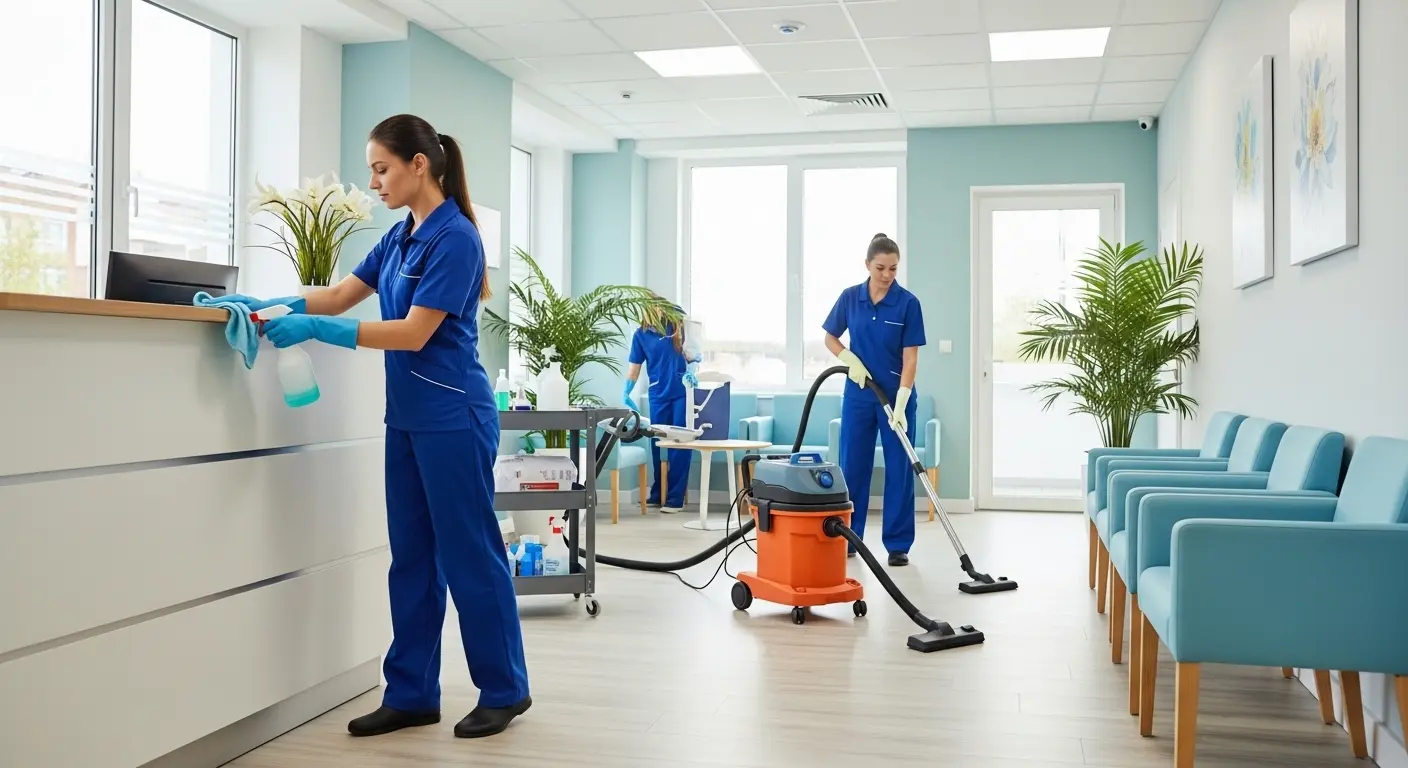
Patients sit, cough, touch magazines, and use shared pens. Waiting areas need frequent disinfection throughout the day, not just after closing hours. A good commercial janitorial service will build a schedule that includes daytime touch-point cleaning along with after-hours deep cleaning.
OSHA and Compliance Standards You Cannot Ignore
Medical facilities in New York must follow OSHA’s Bloodborne Pathogens Standard and meet the state Department of Health regulations. Failing an inspection can lead to fines, lawsuits, or even temporary shutdowns.
Your cleaning crew needs to understand:
- OSHA guidelines for handling sharps and biohazard waste
- HIPAA-related protocols when working with patient records
- Proper PPE usage during cleaning tasks
- Color-coded cleaning systems to prevent cross-contamination between zones
The OSHA Bloodborne Pathogens page outlines the full scope of requirements that apply to any facility where exposure to blood or bodily fluids is possible.
How Infection Control Connects to Your Cleaning Partner
Hiring a general cleaning company for a medical space is a risk. General crews may not have training in biohazard handling or healthcare disinfection standards. Medical office cleaning in NYC demands trained staff who understand dwell times, chemical dilution ratios, and contamination zones.
A report from the American Journal of Infection Control found that consistent, protocol-driven cleaning reduced surface contamination by up to 80% in outpatient settings. That number shows how much of infection prevention depends on your cleaning team.
The Cost of Getting It Wrong
If a patient contracts an infection linked to your facility, the financial and legal consequences go far beyond a fine. You will deal with lawsuits, lost trust, and damage to your reputation that takes years to rebuild. For clinics and private practices, one serious incident can threaten the whole business.
On the other side, a reliable commercial janitorial service with healthcare experience helps you stay compliant, keep patients safe, and protect your practice from avoidable risk.
Read More: How Janitorial Services Differ Across Industries
Medical Cleaning for Smaller Clinics and Private Practices
Not every medical space is a large hospital. Dental offices, dermatology clinics, pediatric practices, and physiotherapy centers all need the same level of hygiene. Even if your clinic has just two exam rooms, the cleaning standards remain the same. Smaller spaces sometimes carry a higher risk because ventilation is limited and patient turnover is fast.
How American Janitorial Services NYC Can Help
We provide medical office cleaning in NYC for clinics, outpatient centers, dental offices, and specialty practices across all five boroughs. Our team follows OSHA-compliant protocols, uses EPA-registered disinfectants, and works around your patient schedule so there is zero disruption. As a trusted commercial janitorial service in NYC, we understand that in healthcare, clean is not a preference. It is a requirement.
If your medical facility does not have a cleaning partner that understands healthcare compliance, every day without one is a day your patients and your practice stay at risk. Contact us today.
Frequently Asked Questions
What type of cleaning solution is best for medical offices and clinics?
Hospital-grade, EPA-registered disinfectants are the best cleaning solutions for medical offices and clinics, effectively eliminating bacteria, viruses, and pathogens on high-touch surfaces. Products with proven efficacy against MRSA, C. diff, and COVID-19 are strongly recommended.
How often should a medical office or clinic be professionally cleaned?
Medical offices and clinics should be professionally cleaned daily, with high-touch surfaces like door handles, exam tables, and waiting room chairs disinfected multiple times throughout the day. Deep cleaning should be scheduled weekly to maintain full infection control compliance.
What is the difference between cleaning, disinfecting, and sanitizing in a medical setting?
Cleaning removes visible dirt and debris, sanitizing reduces bacteria to safe levels, and disinfecting eliminates nearly all pathogens including viruses and fungi. Medical offices require all three steps performed in sequence to meet healthcare hygiene and compliance standards.
Do commercial cleaners for medical offices need special training or certifications?
Yes, commercial cleaners servicing medical offices and clinics should be trained in bloodborne pathogen handling, OSHA compliance, and proper use of personal protective equipment. Certifications from ISSA or GBAC ensure cleaners meet healthcare industry hygiene standards.
What areas of a medical office require the most attention during commercial cleaning?
Exam rooms, waiting areas, restrooms, reception desks, and medical equipment surfaces require the most rigorous cleaning in a medical office. These high-touch, high-traffic zones carry the greatest risk of cross-contamination and must be disinfected thoroughly after every use.